|
Future ShockPerhaps the psychologists and social psychologists can design sharper instruments, more sensitive to differences in probability, more refined and insight-yielding. Yet, if we search for clues rather than certainties, even these primitive devices can help us moderate or channel the flow of change in our lives. For, by helping us identify the zones of rapid change, they also help us identify – or invent – stability zones, patterns of relative constancy in the overwhelming flux. They improve the odds in the personal struggle to manage change. Nor is this a purely negative process – a struggle to suppress or limit change. The issue for any individual attempting to cope with rapid change is how to maintain himself within the adaptive range, and, beyond that, how to find the exquisite optimum point at which he lives at peak effectiveness. Dr. John L. Fuller, a senior scientist at the Jackson Laboratory, a biomedical research center in Bar Harbor, Maine, has conducted experiments in the impact of experiential deprivation and overload. "Some people," he says, "achieve a certain sense of serenity, even in the midst of turmoil, not because they are immune to emotion, but because they have found ways to get just the 'right' amount of change in their lives." The search for that optimum may be what much of the "pursuit of happiness" is about ...» | Код для вставки книги в блог HTML
phpBB
текст
|
|


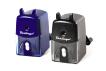 Точилка механическая "Berlingo".
 Набор детской складной мебели Ника "Фиксики. Азбука".












 Orthomol Immun Junior Сила иммунитета на страже Вашего ребенка