|
When China Rules the WorldA large inter-regional trade developed in both luxuries and staples like rice. During the Song dynasty, coastal trade flourished and extended to Japan and South-East Asia. Urbanization proceeded apace, such that by the late thirteenth century Hangzhou, China’s largest city, had a population of almost 7 million, making China by far the most urbanized society in the world, its cities accounting for around 10 per cent of the population. [205] The cities were not, however, to play the same role as centres of political and personal freedom as those in Europe: autonomous urban development was constrained by China ’s centralized imperial structure, a pattern that only began to change in the twentieth century. Encouraged by the government, there was a flowering of learning and a wave of remarkable inventions during the Song dynasty, especially in the century and a half of the Northern Song (960-1126). [206] What is sometimes described as China’s Renaissance witnessed the development of a classical examination system, the birth of neo-Confucianism, the invention of gunpowder, mortars and woodblock printing, the spread of books, and major advances in mathematics, natural sciences, astronomy and geography. [207] A large spinning machine was invented that was to fall only slightly short of what might — at least theoretically — have ushered in an industrial revolution along the lines that Britain was to experience centuries later. [208] In contrast, Europe ’s Renaissance only began two centuries after the end of the Northern Song ...» | Код для вставки книги в блог HTML
phpBB
текст
|
|


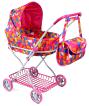 Игрушечная коляска-люлька.
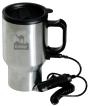 Автокружка с подогревом (450 мл).





 Orthomol Immun Junior Сила иммунитета на страже Вашего ребенка