|
Hackers and Painters: Big Ideas from the Computer AgeIn Javascript the example is, again, slightly longer, because Javascript retains the distinction between statements and expressions, so you need explicit return statements to return values: function foo (n) { return function (i) { return n += i } } (To be fair, Perl also retains this distinction, but deals with it in typical Perl fashion by letting you omit returns.) If you try to translate the Lisp/Ruby/Perl /Smalltalk/Javascript code into Python you run into some limitations. Because Python doesn't fully support lexical variables, you have to create a data structure to hold the value of n . And although Python does have a function data type, there is no literal representation for one (unless the body is only a single expression) so you need to create a named function to return. This is what you end up with: def foo (n): s = [n] def bar (i): s[0] += i return s[0] return bar Python users might legitimately ask why they can't just write def foo (n): return lambda i: return n += i or even def foo (n): lambda i: n += i and my guess is that they probably will, one day. (But if they don't want to wait for Python to evolve the rest of the way into Lisp, they could always just...) In OO languages, you can, to a limited extent, simulate a closure (a function that refers to variables defined in surrounding code) by defining a class with one method and a field to replace each variable from an enclosing scope ...» | Код для вставки книги в блог HTML
phpBB
текст
|
|


 Кроватка-качалка для куклы.
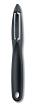 Нож для чистки овощей "Victorinox", универсальный, двустороннее зубчатое лезвие, чёрный.





 Orthomol Immun Junior Сила иммунитета на страже Вашего ребенка