|
Asimov’s Guide To Shakespear. Volume 1He cannot carry his liquor well and he does not enjoy losing his iron control of himself. The rough Enobarbus says to him with some irony: Ha, my brave emperor! Shall we dance now the Egyptian bacchanals And celebrate our drink? —Act II, scene vii, lines 105-7 The word "emperor" is from the Latin imperator, meaning "commander." It was a title given a successful general by his troops. It was one of the titles granted Julius Caesar by the Senate. He was not merely one of many imperators; he was the imperator of the Roman armies as a whole- the generalissimo. Octavius Caesar eventually received the title too, and since control of the army was, at bottom, the secret of the control of the Roman state, his position as "Roman Imperator" was crucial. Through distortion we know the title as "Roman Emperor," and the state became the "Roman Empire." Enobarbus uses the term "emperor" in its less exalted but more accurate aspect as "commander." Both Octavius Caesar and Mark Antony are referred to now and then throughout the play as "emperor." … darting Parthia… While Sextus Pompeius is being alcoholically neutralized in the West, Parthia is being defeated outright in the East ...» | Код для вставки книги в блог HTML
phpBB
текст
|
|


 Поильник–непроливайка Lubby "Русские мотивы" с трубочкой, 240 мл.
 Одеяло "Verossa. Camel", 140х205 см.





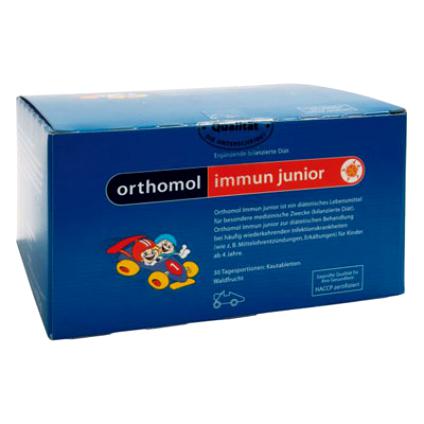 Orthomol Immun Junior Сила иммунитета на страже Вашего ребенка