|
Guns, Germs, and Steel: The Fates of Human SocietiesChina differs only by having been unified much earlier. Its "Sinification" involved the drastic homogenization of a huge region in an ancient melting pot, the repopulation of tropical Southeast Asia, and the exertion of a massive influence on Japan, Korea, and possibly even India. Hence the history of China offers the key to the history of all of East Asia. This chapter will tell the story of how China did become Chinese. a convenient starting point is a detailed linguistic map of China (see Figure 16.1). A glance at it is an eye-opener to all of us accustomed to thinking of China as monolithic. It turns out that, in addition to China's eight "big" languages—Mandarin and its seven close relatives (often referred to collectively simply as "Chinese"), with between 11 million and 800 million speakers each—China also has over 130 "little" languages, many of them with just a few thousand speakers. All these languages, "big" and "little," fall into four language families, which differ greatly in the compactness of their distributions. At the one extreme, Mandarin and its relatives, which constitute the Chinese subfamily of the Sino-Tibetan language family, are distributed continuously from North to South China ...» | Код для вставки книги в блог HTML
phpBB
текст
|
|


 Папка для акварели "Балет", 20 листов, А2.
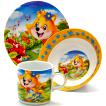 Набор детской посуды "Лиса".
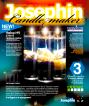 Гелевые свечи с коллекционными морскими раковинами. Набор № 5.





 Orthomol Immun Junior Сила иммунитета на страже Вашего ребенка