|
Kluge: The Haphazard Construction of the Human MindThe peculiar thing is that in addition to quantifiers, we have another whole system that does something similar. This second system traffics in what linguists call "generics," somewhat vague, generally accurate statements, such as Dogs have four legs or Paperbacks are cheaper than hardcovers. A perfect language might stick only to the first system, using explicit quantifiers rather than generics. An explicitly quantified sentence such as Every dog has four legs makes a nice, strong, clear statement, promising no exceptions. We know how to figure out whether it is true. Either all the dogs in the world have four legs, in which case the sentence is true, or at least one dog lacks four legs, in which case the sentence is false — end of story. Even a quantifier like some is fairly clear in its application; some has to mean more than one, and (pragmatically) ought not to mean every. Generics are a whole different ball game, in many ways much less precise than quantifiers. It's just not clear how many dogs have to have four legs before the statement Dogs have four legs can be considered true, and how many dogs would have to exhibit three legs before we'd decide that the statement is false ...» | Код для вставки книги в блог HTML
phpBB
текст
|
|


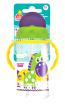 Поильник–непроливайка Lubby "Русские мотивы" с трубочкой, 240 мл.







 Orthomol Immun Junior Сила иммунитета на страже Вашего ребенка