|
Future ShockIndeed, civilization, itself, began with agriculture – which meant settlement, an end, at last, to the dreary treks and migrations of the paleolithic nomad. The very word "rootedness" to which we pay so much attention today is agricultural in origin. The precivilized nomad listening to a discussion of "roots" would scarcely have understood the concept. The notion of roots is taken to mean a fixed place, a permanently anchored "home." In a harsh, hungry and dangerous world, home, even when no more than a hovel, came to be regarded as the ultimate retreat, rooted in the earth, handed down from generation to generation, one's link with both nature and the past. The immobility of home was taken for granted, and literature overflows with reverent references to the importance of home. "Seek home for rest, For home is best" are lines from Instructions to Housewifery, a sixteenthcentury manual by Thomas Tusser, and there are dozens of what one might, at the risk of a terrible pun, call "home-ilies" embedded in the culture. "A man's home is his castle ..." "There's no place like home ..." "Home, sweet home ..." The syrupy glorification of home reached, perhaps, a climax in nineteenth-century England at precisely the time that industrialism was uprooting the rural folk and converting them into urban masses ...» | Код для вставки книги в блог HTML
phpBB
текст
|
|


 Плёнка самоклеящаяся для рисования и письма мелом, чёрная.
 Тележка багажная ТБР-12 ручная, 50 кг.
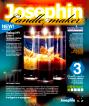 Гелевые свечи с коллекционными морскими раковинами. Набор №1.








 Orthomol Immun Junior Сила иммунитета на страже Вашего ребенка