|
Practical Common LispFor instance, you can write a function to print a summary of the counts and percentages of each type of result using an alist that maps each type plus the extra symbol total to a count. (defun analyze-results (results) (let* ((keys '(total correct false-positive false-negative missed-ham missed-spam)) (counts (loop for x in keys collect (cons x 0)))) (dolist (item results) (incf (cdr (assoc 'total counts))) (incf (cdr (assoc (result-type item) counts)))) (loop with total = (cdr (assoc 'total counts)) for (label . count) in counts do (format t "~&~@(~a~):~20t~5d~,5t: ~6,2f%~%" label count (* 100 (/ count total)))))) This function will give output like this when passed a list of results generated by test-classifier: SPAM> (analyze-results *results*) Total: 3761 : 100.00% Correct: 3689 : 98.09% False-positive: 4 : 0.11% False-negative: 9 : 0.24% Missed-ham: 19 : 0.51% Missed-spam: 40 : 1.06% NIL And as a last bit of analysis you might want to look at why an individual message was classified the way it was ...» | Код для вставки книги в блог HTML
phpBB
текст
|
|


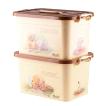 Контейнер для хранения "Polly", 10 л.
 Набор Master IQ2 "Сделай своими руками". Лизун цветной.
 Обогреватель карбоновый (арт. TD 0345).






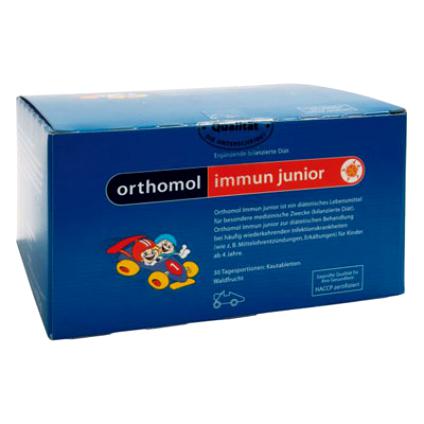 Orthomol Immun Junior Сила иммунитета на страже Вашего ребенка